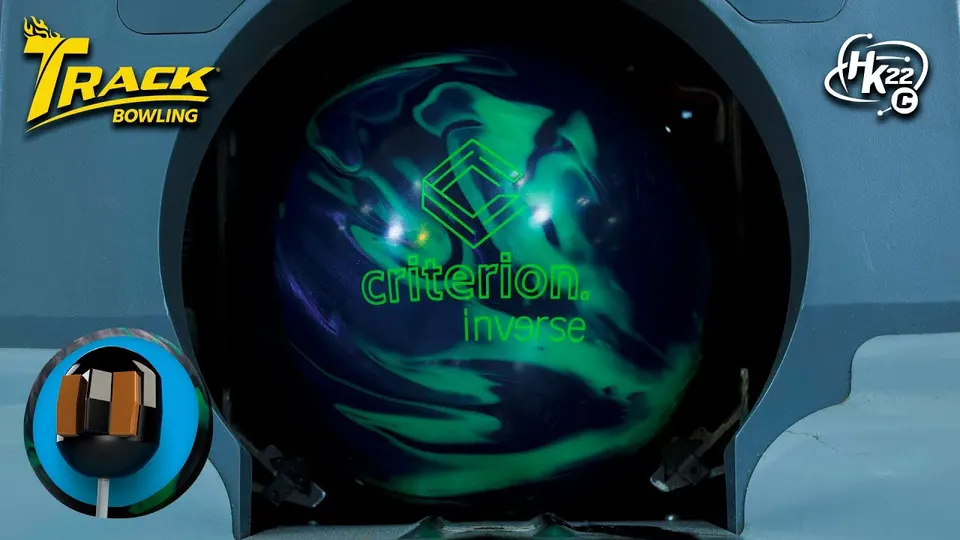
Track Criterion Inverse Review
The Track Criterion Inverse flips the core for a cleaner asymmetric pearl built for sport patterns and wet/dry lane conditions. Video reviews inside.
Welcome to another episode of Trackcast. I'm Rich Hansen, the product manager for track bowling. And today we're going to talk about the new Criterion Inverse. So now let's talk about the new Criterion Inverse and how it differs from the Criterion Hybrid and the regular Criterion. One is the cover stock. This new cover stock is super response pearl and our HK22C base. So this is a pearl version of what was in the hybrid and it's also the same cover base that was found on the new
theorem solid but in a pearl version. Secondly is a core design. This one features a criterion ID core which is stands for inverted density. So, same shape as the original criterion, but whereas in the original, the inner piece was a lighter density and the main body was denser, we're actually inverting those. So, what that does, it's going to lower our G slightly because now this piece is a densest. It's going to lower the differential slightly and also lower
the intermediate differential slightly. So what we end up with is 2496 for our RG, 0047 for our differential, and 016 for our intermediate differential. So what are those changes going to give you? That cover stock change to the Super Response Pearl and the HK22C base with those new core numbers and the inverted density. We're going to see cleaner look through the front part of the lane. We're going to have a strong back-end reaction, and this ball is going to match up best on medium oil
conditions. So, now let's talk about how this ball is going to compare to our two previous launches, the Theorem Solid and the Paragon Shadow. The Paragon Shadow is that first ball of the bag, something that's going to dig in the oil and give you predictability and be able to cut through the thickest of oils. The Theorem Solid is a little bit different. It's a little cleaner through the front. Still an asymmetric piece, but more responsive down lane, but still designed to handle medium to heavy oil conditions. This inverse is going to be cleaner than all all those balls. It's going to store more energy through the
front, be a much more responsive ball at the back of the lane. So, when the front start to break down a little bit, it may not be the first ball of your bag, but it's a ball you're going to transition to from that Paragon Shadow or that theorem solid. So now let's talk about where this new inverse fits into the Criterion line. So we have the Criterion, the Criterion Hybrid, and now the Criterion inverse. Once again, that Criterion is that big heavy oil ball. First ball of your bag, something on the heavy oil, something you need to dig in, give you predictability, and control the pattern
more. So then we have the Criterion Hybrid, a polished hybrid version, super response hybrid cover, same HK22C base. ball was cleaner than the Criterion but had more of a mid-lane reaction. Still predictable but a little bit more flip down lane. Now with the inverse, we're changing those core numbers. We're going to a pearl version of that super response cover stock. Get us cleaner reaction to the front and a much more responsive motion down lane because of those core numbers and that cover change.
All right, so there we wrapped up talk about the new Criterion Inverse. For more information about this ball or other great Track products, make sure you visit at trackbowling.com. And as always, make sure you follow us on our social media channels.
Performance Analysis
Performance Analysis
Testing revealed that the Track Criterion Inverse delivers a notably cleaner front-lane motion compared to its predecessors in the Criterion line, with a pronounced strong backend reaction designed for medium oil conditions. The Reactive Pearl coverstock combined with the inverted-density asymmetric core (RG 2496, differential .0047) creates a ball that stores energy through the front part of the lane before unleashing a more responsive downlane motion. Independent reviewers observed this characteristic makes the Criterion Inverse less of a heavy-oil workhorse and more of a transitional piece, cleaner and more energetic than both the original Criterion and Criterion Hybrid, positioning it as a logical next step when heavy oil patterns begin to break down.
The ball’s performance profile suggests it works best as a midlane adjustment tool rather than an opening shot on fresh oil. Compared to the Theorem Solid and Paragon Shadow in Track’s recent lineup, the Criterion Inverse sits on the cleaner end of the spectrum with stronger backend responsiveness, making it ideal for bowlers who need their asymmetric ball to read the lane more aggressively in medium conditions. The pearl coverstock and inverted core design work together to minimize skid through the front and maximize angular motion downlane, a meaningful distinction for players transitioning from heavier oil conditions into drier backends.
Who Is This Ball For?
The Criterion Inverse is best suited for intermediate to advanced bowlers who throw medium-speed to high-speed deliveries and regularly bowl on medium oil patterns. This ball works particularly well for players who already carry a heavy-oil asymmetric (like the original Criterion or Paragon Shadow) and need a more responsive option when oil conditions transition. The Criterion Inverse fills a practical role in a two-or-more-ball arsenal rather than serving as a standalone solution.
Bowlers who prefer cleaner, more angular ball motion with strong backend read will appreciate what this ball offers, especially those frustrated by asymmetric balls that bog down in medium oil. At $189.95, it represents an accessible entry point for players looking to add a responsive asymmetric piece to their bag without committing to premium pricing.
The Pros
- • Reversed core densities create a cleaner, more controlled motion than standard Criterion models
- • HK22 Pearl cover with 1500 grit polish delivers excellent length and sharp backend snap
- • Reduced .047 differential provides control without sacrificing downlane continuation
- • Excels on wet/dry patterns and tougher sport conditions where control is paramount
The Cons
- • Lower differential limits total hook potential compared to other Track asymmetrics
- • Pearl cover may skid too far on broken-down conditions
- • At $189.95, priced the same as more aggressive options in the Track lineup
Who Is This Ball For?
The Track Criterion Inverse flips the core for a cleaner asymmetric pearl built for sport patterns and wet/dry lane conditions. Video reviews inside.
Technical Specifications
How It Compares


More Videos (11)

Track Criterion Inverse | Medium Oil | 2 Hander
Track Bowling
Criterion Inverse on Light Oil!
Track Bowling
Track Criterion Inverse | Dave Klaas
Track Bowling
Track Criterion Inverse | Boston Briseno
Track Bowling
Track Criterion Inverse | Frank Testa
Track Bowling
Track Criterion Inverse | Brandon Tarabek
Track Bowling
YEP, IT FLIPS! | Track Criterion Inverse
BrunsNick
TRACK CRITERION INVERSE | Pearl Criterion with a Twist??
Luke Rosdahl
Sleeper Bowling Ball of 2025? | Track Criterion Inverse
The Hype
Track Criterion Inverse vs. Stealth Mode | Track Cast
Track Bowling
Track Criterion Inverse vs. Theorem Solid | Track Cast
Track BowlingVerified Bowler Reviews (2 reviews, 5.0/5 avg)
Smooth, control ball, used 5"-4"-2" layout, good for transition conditiion.
AK, United States
Frequently Asked Questions
What oil condition is the Track Criterion Inverse best for?
Is the Track Criterion Inverse good for beginners?
What is the RG and differential of the Track Criterion Inverse?
How much does the Track Criterion Inverse cost?
What type of bowler should use the Track Criterion Inverse?
Explore More Reviews
Other Medium-Heavy Oil Balls



More from Track


Similar Price Range


Never Miss a Release
Join serious bowlers getting the weekly data dump on new ball releases and performance data.