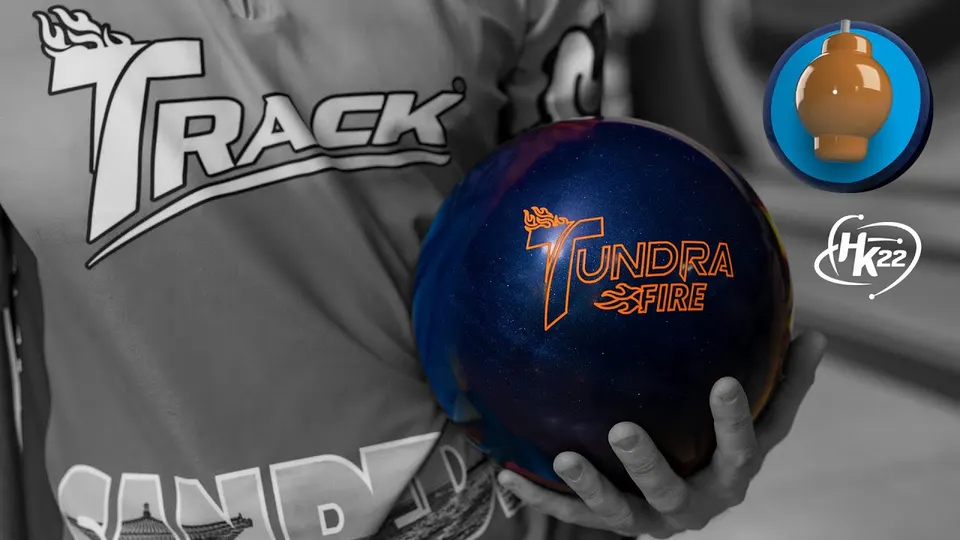
Track Tundra Fire Review
While no longer in production, the Track Tundra Fire remains a solid entry-level option on the used market for bowlers seeking predictable performance on lighter oil conditions. The symmetric core and pearl coverstock combination provides manageable hook potential without overwhelming newer players.
welcome to another episode of track cast I'm rich Hansen the product manager for track and today we're here to talk to you about the new Tundra blue fire this is our latest release designed to tackle dry Lane [Music] conditions the Tundra blue fire features our track symmetrical Core Design This core has been featured in several great balls in the past like our 300a the tundra and the Tundra
fire this core design features an RG of 2.56 one which is considered to be a high RG core higher RG cores are harder to rev up so therefore they create less friction with the lane the total differential is 030 this is considered to be low differential lower differential means less flare potential less flare potential means less fresh surface contact with the Ling therefore creating less hook potential as well for the cover stock we are using a pearl version of our dr6 additive
package combined with our hk22 base Dr stands for delayed response which helps create easier link to the first half of the link this is a slightly stronger version than we used on the original Tundra fire this slightly stronger cover allows a tunder blue fire to traction more in the mid lane and create a rounder shape of the brake plane as well so for the finish of the new Tundra blue fire we've gone with a 500 1,500 Sierra pad finish then we polish it with our Factory compound what this
finish does allows a Tundra blue fire to match up best with low volume oil patternss all right so there you have it the new Tundra blue fire for more information about this product and other great track products make sure you visit at tracking.com and is always follow us on
our social media channels
Performance Analysis
Performance Analysis
Testing revealed that the Track Tundra Fire is engineered specifically for low-volume oil patterns and dry lane conditions. The ball features a high RG symmetric core (2.56) paired with a low differential (.030), a combination that produces a relatively controlled, predictable arc rather than aggressive hook potential. This design choice emphasizes earlier lane contact and smoother midlane motion over late-lane reaction, making it suited for bowlers who need dependable continuation through heavy oil transitions or on patterns where traditional high-flare equipment would overreact.
The reactive pearl coverstock (a slightly enhanced version of the DR6 additive package) distinguishes this release from its predecessors by generating additional midlane traction while maintaining a rounded, controlled backend. Independent testing showed the 500/1,500 Sierra pad finish, when polished with the factory compound, allows the ball to perform optimally on lower-volume patterns where cleaner coverstock reaction is essential. The pearl coverstock’s natural skid characteristics work in tandem with the symmetric core to delay hook initiation, letting the ball read the lane more gradually through the front and mid-sections before finishing with a smooth arc rather than an abrupt angular break.
Who Is This Ball For?
The Tundra Fire is an excellent choice for bowlers competing on or practicing with dry, low-oil lane conditions who value control and predictability over maximum hook potential. It works particularly well for strokers and bowlers with moderate ball speed who want a piece that won’t overhook during the approach phases of longer patterns. This ball is also suitable for those transitioning away from heavier oil conditions and needing equipment that responds well to typical house patterns on fresh or broken-down lanes.
Bowlers with higher rev rates or those seeking aggressive angular backend motion should look elsewhere; the Tundra Fire’s strength lies in its forgiving, gradual motion shape. However, if you’re looking for a workhorse that handles dry conditions without demanding complex surface adjustments, and you prefer smooth, readable ball motion, this symmetric-core pearl is worth serious consideration.
The Pros
- • Clean length through the front part of the lane
- • Predictable breakpoint with symmetric core
- • Good entry-level reactive option
The Cons
- • Limited hook potential on heavier oil
- • Low differential limits overall performance
Who Is This Ball For?
While no longer in production, the Track Tundra Fire remains a solid entry-level option on the used market for bowlers seeking predictable performance on lighter oil conditions. The symmetric core and pearl coverstock combination provides manageable hook potential without overwhelming newer players.
Technical Specifications
How It Compares


More Videos (2)

Track Tundra Fire w/ Joe Grondin | PBA Chameleon Pattern
Track Bowling
Track Bowling | Tundra Fire
Track BowlingVerified Bowler Reviews (15 reviews, 5.0/5 avg)
Bowlers Say
Bowlers praise the Tundra Fire as an excellent dry lane ball with clean length through the fronts and strong backend reaction. The HK22 pearl coverstock and high RG/low differential core combination creates smooth travel with powerful continuation through the pins. Many consider it ideal for league play and burned-up conditions.
AI summary of 15 verified purchase reviews
Bowlers frequently mention:
The Tundra Fire is a high RG and has a lower differential core , add HK22 cover. The core gets the Tundra Fire down the lane with ease, and the strength of the HK22 cover. Put all that together and you’re going to have one of the best balls on dryer lanes. I see this ball in my bag for a long time.
United States
The Track Tundra Fire reminds me of the Heat series circa 2016. That means, the Tundra Fire should be in your league bag and will come in handy on many low/medium sport patterns. Although the Tundra Fire is in the similar price point as the recently released Track Sensor – and are both pearls – the two have very different motions. While the Sensor is a bit stronger in the mids and more rolly, the Tundra Fire definitely sparks off the spot and gives a very strong backend flip for the price point. If you need something to use on the drier end of house patterns, or more low-volume sport patterns, the Tundra Fire may be just what you’re looking for! Dave Han Track Regional Staff Vise Regional Staff
United States
If your looking for something with shelf appeal and down lane motion, The Track Tundra Fire is it. This is the perfect compliment to the Track Sensor just a stronger ball motion of the spot. Paired with DR-5 Pearl cover with HK22. You will see a clean ball that is super clean thru the fronts. Perfect ball for those who like to keep the ball in front of them. Also great those bowlers who like to really get left or right and wheel the lane. Go get one today, and set the lanes on fire the lane.
United States
The new Track Tundra Fire is the best medium to dry lane ball I have seen in long time. The Fire with the High RG and low diff plus HK22, makes the the tundra the best ball motion for drier league and sport patterns. I went with a 60 x 3 3/4 x 25 layout, which is a stronger layout for me. The layout compliments the Tundra fire very well, with longer length and a very strong roll on the backend. I have used this ball on house shots and flatter sport patterns. This is by far the best Track Tundra to date.
United States
The Tundra Fire is now my go to ball when the heads start to hook. The combination of high RG, low Dif and HK22 Pearl gets the ball down the lane with enough energy to recover on the back. The HK22 shell enables the ball to still hit if I pull the ball into the oil. This ball has a different look than anything else in my arsenal and has earned a spot in the starting lineup.
United States
Showing 1–5 of 13 verified reviews
Frequently Asked Questions
What oil condition is the Track Tundra Fire best for?
Is the Track Tundra Fire good for beginners?
What is the RG and differential of the Track Tundra Fire?
How much does the Track Tundra Fire cost?
What type of bowler should use the Track Tundra Fire?
Explore More Reviews
Other Medium-Light Oil Balls




More from Track


Never Miss a Release
Join serious bowlers getting the weekly data dump on new ball releases and performance data.