How We Ranked the Best Heavy Oil Bowling Balls
Our ranking methodology combines three verification sources to ensure reliability:
- Video performance analysis from real bowlers on heavy oil patterns
- Verified customer reviews cross-referenced from Shopper Approved
- Real sales data from BowlersMart.com tracking what working bowlers actually purchase
Each ball is scored on five core criteria: hook potential (track flare and angle of entry), oil traction (coverstock reactivity to high volume), backend motion (aggressiveness after breakpoint), pin carry (energy retention and drive), and versatility across fresh and transition conditions.
Our methodology filters out marketing hype. We focus exclusively on performance that matters in sport shots and house patterns with 25–30ml of oil and 40+ feet of track length.
What Makes a Great Heavy Oil Bowling Ball?
Heavy oil bowling (conditions typically found in sport patterns, PBA tournaments, and competitive house shots) requires equipment specifically engineered to grip oil and maintain aggressive motion.
The core challenge: Oil reduces friction, and reduced friction kills hook. Every ball on this list overcomes that with three technical advantages.
Coverstock Chemistry and Reactive Compounds
All eight balls use reactive resin coverstocks, specifically formulated to absorb and interact with oil. Unlike urethane or plastic bowled 30 years ago, modern reactives use porosity, additives, and surface geometry to dig into the oil film itself.
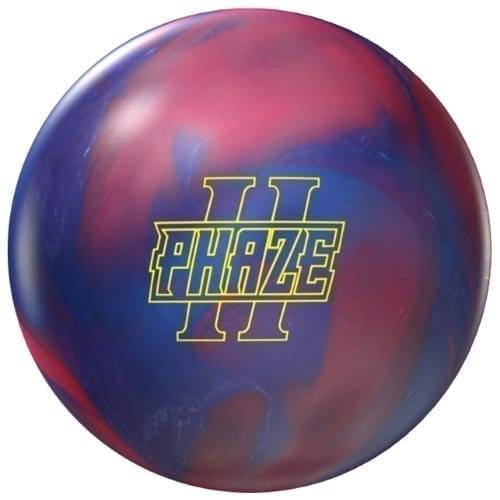
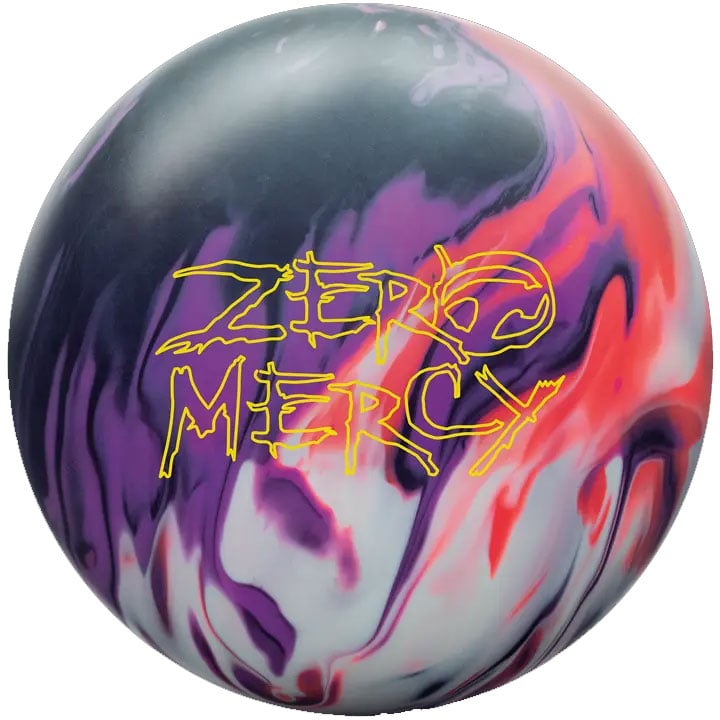
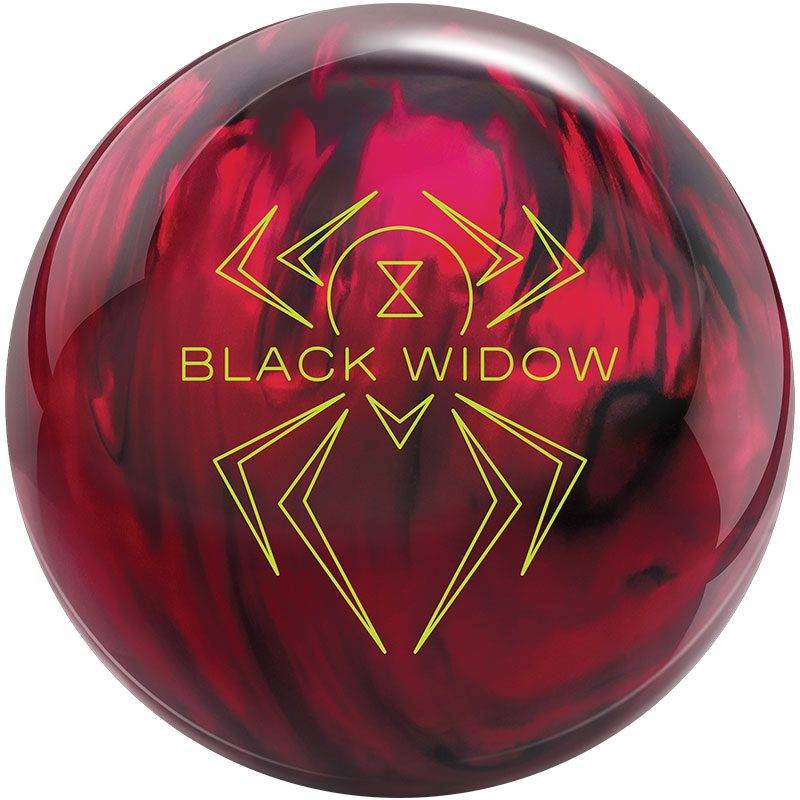
- Solid reactives (Ion Max, Black Widow 3.0 Dynasty, Zero Mercy Solid): absorb the most oil, provide the earliest hook angle
- Pearl reactives (PhysiX Blackout, Black Dragon Pearl, Hater Pearl, Infinity Quest): store energy longer, produce more aggressive backend motion during transition
- Hybrid reactives (The One Ovation), blend solid and pearl for bowlers who need one ball to handle both fresh and transition oil
Key takeaway: Solid reactives excel at fresh conditions (early-to-mid-track hooks). Pearls excel when lanes transition (later breakpoint, more violent backend snap).
Core Design and RG/Differential Specifications
Every ball in this ranking uses an asymmetric core, essential for heavy oil because asymmetric designs maximize track flare. More flare means more surface area engaging the lane, and on heavy oil, surface contact is what creates grip.
All eight balls cluster around an RG of 2.46–2.53 and a differential of 0.051–0.058. This is deliberately tight:
- Low RG (2.46–2.48): the ball enters the breakpoint earlier, giving oil time to slow it naturally
- High differential (0.051–0.058): creates aggressive track flare, covering more boards
The Storm PhysiX Blackout (RG 2.47, Diff 0.055) and Ion Max (RG 2.47, Diff 0.055) both exemplify this ideal balance: which is why they rank top two.
Surface Finish and Aggressiveness
All picks ship with factory finishes between 1000–2000 grit, already aggressive by modern standards. For fresh heavy oil, this is often perfect out of the box.
Pro tip: If your lanes are extremely heavy (30+ ml), have a pro shop sand lower (500–1000 grit) to increase surface area. Keep a gray ScotchBrite pad in your bag for quick mid-tournament adjustments.
Solid vs Pearl vs Hybrid: Which Coverstock for Heavy Oil?
Solid Reactive Coverstocks for Fresh Heavy Oil
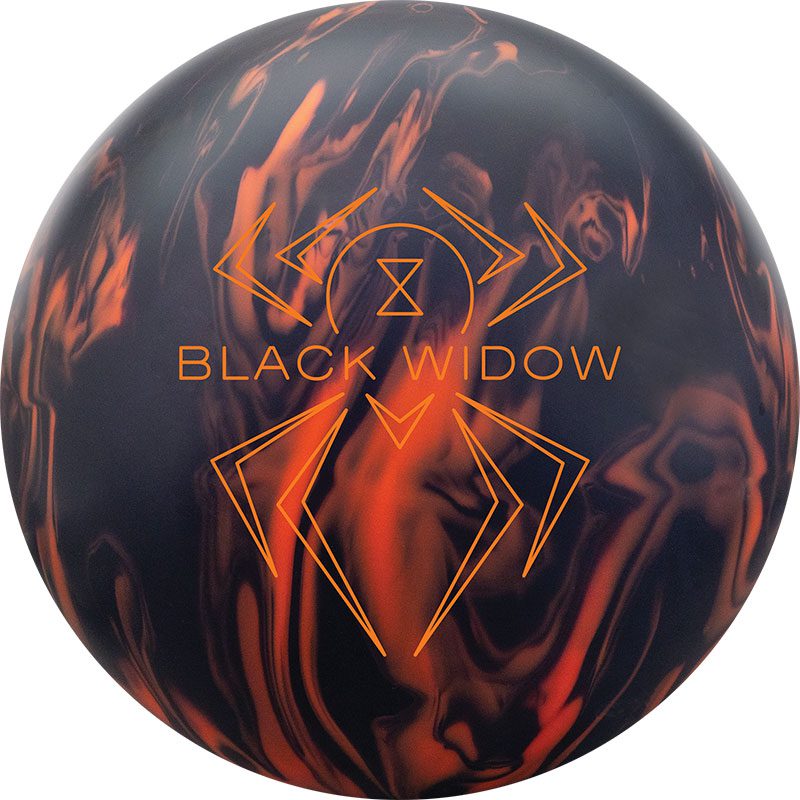
The Ion Max ($174.95), Black Widow 3.0 Dynasty ($169.95), and Zero Mercy Solid ($194.95) all use solid reactive coverstock: pure, unshined reactive resin. On fresh heavy oil, solids are the safest choice: they absorb oil aggressively and hook earlier and more predictably than pearls.
Best value solid: The Ion Max at $174.95 offers nearly identical specs to the $194.95 Zero Mercy Solid for $20 less, the better pick for fresh-pattern specialists.
Pearl Reactives for Transition and Length
The PhysiX Blackout (rank 1), Black Dragon Pearl ($159.95), Hater Pearl ($159.95), and Infinity Quest ($169.95) use pearl coverstock. The reactive base is polished to reduce surface texture, creating a longer skid phase before engaging the friction line.
On a fresh pattern, a pearl may feel like it isn’t hooking. On a transitioning or medium-heavy pattern, that extended skid becomes a weapon: pearl balls carry energy further and produce more violent backend motion when they engage.
Why PhysiX Blackout ranks #1: It combines pearl coverstock with Storm’s Atomic Core (asymmetric, RG 2.47, Diff 0.055) for the best of both worlds, pearl length with responsive core motion.
Hybrid Reactives for Versatility
The Ebonite The One Ovation ($159.95, rank 3) is the hybrid option, a solid reactive base with a coverstock that performs between solid and pearl. For bowlers who bowl multiple games on the same pattern or roll into transition without a ball change, the hybrid is the smart pick.
You sacrifice peak performance in any single condition but gain the ability to shoot 12 frames with one ball and still have good motion. At $159.95, it’s competitively priced with pure solids and pearls.
How to Choose Your Heavy Oil Ball
Speed-Dominant Bowlers (17+ mph)
Your primary challenge on heavy oil is early hook: you’re blowing through friction, and oil amplifies the problem. Solid reactives are your friend:
- Best value: Ion Max (Hook 9.5) at $174.95
- Premium pick: Zero Mercy Solid (Hook 9.5) at $194.95
- Middle ground: Black Widow 3.0 Dynasty (Hook 9.0) at $169.95
Rev-Dominant Bowlers (400+ rpm)
You’re already creating your own flare potential and friction. Pearl reactives work exceptionally well because your rotational energy helps the ball engage despite the pearl’s extended skid:
- Top pick: PhysiX Blackout (rank 1, $179.95), designed for rpm-dominant release
- Budget alternatives: DV8 Hater Pearl ($159.95) or Black Dragon Pearl ($159.95)
Tweener Bowlers (15–17 mph, 300–400 rpm)
The hybrid approach makes the most sense for your game. Two options:
- Single ball: The One Ovation ($159.95) handles fresh and transition
- Two-ball arsenal: Ion Max solid ($174.95) + Black Dragon Pearl ($159.95) = $334.90 for a professional setup
Budget Considerations
Three balls stand out for value, all under $180 with performance comparable to balls $15–20 more expensive:
- Ebonite The One Ovation, $159.95
- SWAG Black Dragon Pearl, $159.95
- Storm Ion Max, $174.95
Best bang for your buck: The Black Dragon Pearl punches well above its price point, an excellent entry into asymmetric pearl performance on heavy oil.
Arsenal Building Strategy
Serious heavy oil bowlers should own at least two balls:
- Start with a solid reactive for fresh patterns, Ion Max or Black Widow 3.0 Dynasty
- Add a pearl for transition, PhysiX Blackout or Black Dragon Pearl
- Optional third ball: a hybrid (The One Ovation) for when you’re unsure which direction the lanes are trending
The two-ball combo covers 80% of heavy oil scenarios without requiring a ball change mid-string.
Surface Adjustments and Maintenance Tips
Understanding Factory Finish
All eight balls ship between 1000–2000 grit, moderately aggressive and sufficient for heavy oil straight out of the box. Every lane is different, though.
If your lanes are extremely heavy (30+ ml) and your ball slides too far before engaging, have a pro shop sand it lower (500–1000 grit) to increase surface area and early grab.
Resurfacing Schedule
Heavy oil balls absorb significant oil and generate track wear quickly. Plan to resurface every 60–80 games, or whenever you notice the ball losing hook compared to its first month. Resurfacing costs $25–40 at your local pro shop and effectively resets the ball’s traction profile.
Oil Extraction (Baking)
Every 30–40 heavy oil games, have your balls baked to extract absorbed oil. A pro shop oven at 200°F for 30 minutes removes most absorbed oil and restores core motion.
Why this matters: Many bowlers skip this step and wonder why their balls feel slower after 100 games. Baking extends ball life and maintains consistent performance, it’s the single most overlooked maintenance step.
Quick Adjustments Between Games
If your solid is starting to skid too much in game three, use a gray ScotchBrite pad to add surface immediately. This increases friction microscopically and can restore hook for another game without needing pro shop time.
Tournament tip: Always keep a ScotchBrite pad in your bag for heavy oil events. It’s the fastest mid-session adjustment available.
Heavy oil bowling rewards equipment that prioritizes grip, and every ball in this ranking delivers. Your job is matching the coverstock type to your release style and lane transition patterns, then maintaining surface properly. Master these factors, and you’ll convert heavy oil patterns that frustrate other bowlers.